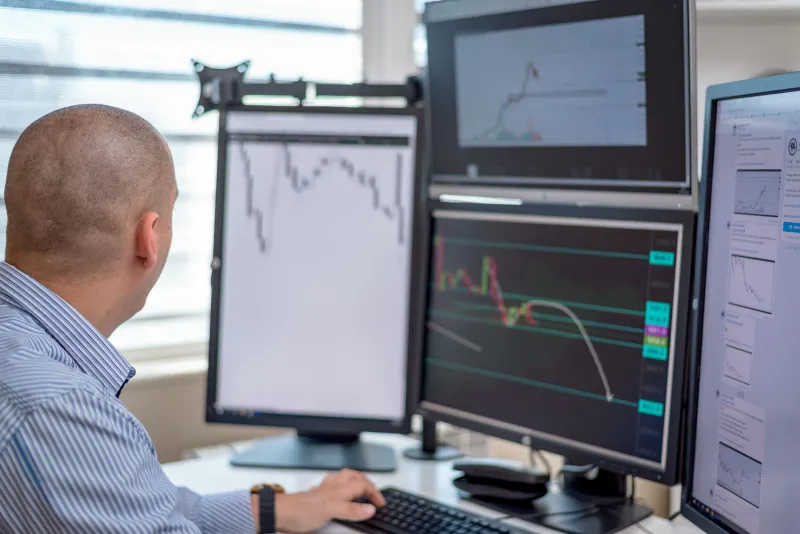
Your Setup Is Betraying You: The Hidden Environmental Killers Draining Your Edge Before You Place a Single Bet

Photo by Photo by June Heredia on Unsplash on Unsplash
You spent twenty minutes researching that line. You know the injury report, you tracked the line movement, and you've got a solid read on the matchup. You feel locked in.
Then your phone buzzes. Your roommate walks through the room. The app takes four seconds to load. You squint at your screen because the sun is blasting through the blinds, and you tap confirm on a bet you're not totally sure about.
That's not bad luck. That's a broken setup — and it's costing you money every single session.
Here at LionBet 777, we talk a lot about the mental game. But even a perfectly tuned mind can get wrecked by a garbage environment. The sharpest bettors in the country don't just study lines — they audit their physical and digital surroundings before they ever open a betting interface. Let's break down exactly what they check, and why it matters more than most players realize.
The Notification Ambush
Your smartphone is a weapon pointed directly at your concentration. The average American receives somewhere between 65 and 80 push notifications per day. That number doesn't pause because you're mid-session on a casino game or deep in a live betting window.
Every interruption — even a half-second glance at a text from your buddy — triggers what cognitive scientists call an "attentional residue." Your brain doesn't snap back to full focus the moment you look away from the notification. A chunk of your mental bandwidth is still processing that distraction for up to 20 minutes afterward.
Now imagine you're trying to evaluate a rapidly shifting live spread during that window. You're not operating at full capacity. You're making real-money decisions with a compromised processor.
The fix is almost embarrassingly simple: Do Not Disturb mode, every single session, no exceptions. Not vibrate. Not silent. Full DND. Sharp bettors treat a gaming session the same way a surgeon treats an operation — interruptions aren't annoying, they're dangerous.
Screen Quality and the Glare Tax
This one sounds almost too basic to matter. It isn't.
Screen glare forces your eyes to work harder to parse information. When you're scanning odds, reading game stats, or navigating a casino interface, visual strain subtly increases cognitive load — meaning your brain is spending energy on seeing rather than thinking. Over a two-hour session, that tax adds up in ways you won't consciously notice but will absolutely feel in your decision quality.
Betting app interfaces are already designed with specific visual hierarchies meant to direct your attention toward certain actions. Add glare on top of that, and you're playing into the app's hand rather than your own.
Fix: Position your screen so ambient light sources — windows, overhead lights, TVs — aren't reflecting directly into your display. Night mode or a blue-light filter isn't just for sleep hygiene; it reduces the visual processing load during extended sessions. If you're on desktop, a matte screen protector is a ten-dollar investment that pays for itself.
Connection Quality: The Silent Saboteur of Live Betting
Lag is a killer in live betting environments. A two-second delay between what's happening on the field and what's updating in your app isn't just annoying — it means you're reacting to outdated information.
In live sports betting especially, lines move in real time based on game action. If your connection is buffering, you might think you're getting a sharp number when you're actually getting a stale one that the market has already corrected. You're the last one to know, and the book is perfectly happy to take your money on that basis.
Before any serious session, run a quick speed test. Anything under 25 Mbps on a shared home network during peak evening hours (roughly 7–11 PM Eastern, when most of the country is streaming) can create meaningful latency in app performance. If your signal is weak, move closer to your router or switch to a wired connection if you're on desktop. It sounds like tech-bro advice, but it's genuinely one of the fastest free upgrades a live bettor can make.
The Couch Problem (And It's Not What You Think)
Playing from the couch isn't inherently bad. The problem is what the couch signals to your brain.
Physical posture has a documented effect on cognitive performance and risk tolerance. Studies on embodied cognition — the idea that your body's physical state influences your mental state — consistently show that slouched, reclined positions correlate with more passive, less analytical thinking. You're in comfort mode. Your brain is less primed for sharp, critical evaluation.
More practically: the couch usually means the TV is on, there are snacks nearby, other people might be around, and you're operating in a social or relaxation context. That's a fine context for casual entertainment. It's a rough context for making disciplined financial decisions under uncertainty.
Sharp bettors tend to have a dedicated spot — even if it's just a specific chair at a desk — where gaming is the primary activity. The environmental cue alone shifts their mental posture. You don't need a trading desk setup. You need a consistent physical context that your brain associates with focus rather than relaxation.
Time Zone Drift and Session Timing
When you're playing matters as much as where. And in the US, the spread across time zones creates some genuinely underappreciated edge opportunities — and traps.
For sports bettors on the West Coast, early Sunday NFL games open at 10 AM local time. If you were out Saturday night, that's a brutal window for sharp decision-making. East Coast bettors have the opposite problem: late-night West Coast games running past midnight when cognitive fatigue is already setting in.
Beyond sports, casino games have their own timing dynamics. Your personal circadian rhythm affects risk assessment, impulse control, and working memory in measurable ways. Most people hit their cognitive peak in the mid-to-late morning, with a secondary window in the early evening. Late-night sessions — even when you feel awake — tend to produce looser, less disciplined play.
Do a brutally honest audit of when you're actually playing versus when you're performing your best. If you're consistently logging sessions during your mental off-hours, you're spotting the house an edge it didn't even have to earn.
The Pre-Session Audit: What Sharp Bettors Actually Do
Before any meaningful session, the players who consistently perform well run through a short environmental checklist. It takes about three minutes and it's worth more than most strategy guides:
- Notifications off. Full DND, no exceptions.
- Screen positioned away from direct light sources, brightness adjusted.
- Connection tested. Speed check, router proximity confirmed.
- Physical setup deliberate. Dedicated spot, upright posture, TV off or muted.
- Timing checked. Are you in your peak cognitive window? If not, is this session worth the handicap?
- Distractions cleared. Other tabs closed, non-essential apps minimized.
None of this is glamorous. None of it shows up in a highlight reel. But the gap between a player who does this consistently and one who doesn't isn't measured in luck — it's measured in sustained decision quality over hundreds of sessions.
The Bottom Line
The lion doesn't hunt in bad conditions if it can wait for better ones. That's not timidity — that's precision. At LionBet 777, we believe the edge isn't always in the research or the pick. Sometimes it's in refusing to play until your environment is actually set up to let you perform.
Your phone, your couch, your Wi-Fi, and your clock are either working for you or against you. Most players never bother to find out which. The ones who do tend to play a very different game.